Marine Grounding and Bonding Basics

Two wires on your boat do almost nothing on a calm day and everything on a bad one. They carry no signal, power no lights, and most owners never touch them. Then a fitting starts pitting, a shore-power fault trips, or a swimmer near the transom feels a tingle, and suddenly those quiet green wires are the most important thing on the vessel. That is the world of marine grounding and bonding, and it is worth understanding before something forces you to.
What grounding and bonding actually mean
Grounding is the path that fault current takes to get back to its source safely. If a hot wire chafes through and touches a metal panel, the ground gives that current somewhere to go besides your hand.
Bonding is different. It is the practice of connecting all the underwater metal and major metal masses together with a conductor so they all share the same electrical potential, meaning the same voltage.
Here is the plain-language version. Grounding is about clearing faults. Bonding is about keeping metal parts from becoming little batteries against each other. They overlap because the bonding system is usually tied to the DC negative and the AC safety ground, so one green wire can end up doing double duty.

Why a boat is not a house
In a house, the electrical ground goes to an actual rod driven into the earth. A boat floats in a conductive medium (salt water) with no earth connection at all, so the rules change.
The water itself becomes part of the picture. Any voltage difference between two submerged metal parts drives current through the water, and that current eats metal. This is why bonding matters far more on a boat than in your garage.
If you are just getting your bearings on how the whole electrical system fits together, start with our 12V Boat Wiring Guide for Beginners and come back here. Grounding and bonding make a lot more sense once the basic circuit picture is in your head.
The three grounds people mix up
Most confusion comes from lumping three different “grounds” into one word. They are related but not the same, and knowing which is which saves you real trouble.
| System | What it does | Typical conductor |
|---|---|---|
| DC negative (ground) | Return path for 12V current back to the battery | Yellow or black, sized to the load |
| AC safety ground | Clears 120V faults, trips the breaker, protects people | Green, matches the AC circuit |
| Bonding conductor | Ties underwater metal to a common potential | Green, usually 8-gauge or larger |
On most boats these three are connected at a single common point, often the engine negative bus or a dedicated bonding bus. The key word is single. Multiple ground points create loops, and loops create corrosion and noise.
Why one common point matters
When you tie everything to one spot, current has one clean route and no competing paths. Two separate ground connections let current wander through your through-hulls and shaft on its way home, and that is how metal starts disappearing.
Bonding and the corrosion problem
Two dissimilar metals sitting in salt water form a galvanic cell, a weak battery, and the more active metal corrodes to protect the nobler one. Your bronze seacock and your stainless shaft are not friends by default.
Bonding connects those parts so a shared sacrificial anode (a zinc, aluminum, or magnesium block) takes the hit instead of your expensive fittings. The anode is designed to erode; your rudder is not.
A boat I rewired last spring had beautiful new wiring above the waterline and a bonding system that had been abandoned years earlier. Three of its four bronze seacocks were pink and crumbling from dezincification. The owner had been sold on fancy switch panels while the two-dollar green wires that actually protect the hull were left disconnected. That job cost him about $1,400 in haulout and fittings that a $40 spool of wire would have prevented.
Stray current versus galvanic corrosion
Galvanic corrosion is slow and natural. Stray-current corrosion is fast and man-made, caused by DC leaking out of a bad connection and returning through the water. Stray current can destroy a prop in weeks, not years.
Good bonding and clean, tight DC negatives are your defense against both. If your zincs vanish in a month, suspect a wiring fault before you blame the marina.
Sizing and running the wire
Bonding conductors are usually 8-gauge green stranded wire on boats under 40 feet or so, stepping up to 6-gauge or 4-gauge on larger vessels with big metal masses. The idea is a conductor large enough to carry fault current without melting before the breaker trips.
This is not the place to reuse leftover lamp cord. Use tinned marine wire, crimp with proper heat-shrink terminals, and keep runs continuous where you can. Our guide on How to Choose Marine Wire Gauge walks through the numbers if you want the full sizing logic.
Every underwater metal fitting gets a bonding connection: seacocks, the engine, the shaft (through a brush or coupling), metal fuel tanks, the rudder port, and any strut. Connect them in a single run back to the common bonding point, not in a random daisy chain that skips fittings.
Where fusing and protection fit in
Grounding and bonding do not replace overcurrent protection. Every positive circuit still needs a fuse or breaker sized correctly, and that is a separate discipline covered in Fuses vs Circuit Breakers on Boats.
Think of it as a team. Fuses stop the fire, grounding gives the fault a path so the fuse can act, and bonding keeps the metal alive in between.
Shore power, AC, and swimmer safety
When you plug into shore power, your boat inherits the marina’s AC safety ground through the green wire in the cord. That connection is what trips a breaker if a hot wire faults to a metal case instead of electrifying the whole boat.
It also introduces galvanic risk, because you are now electrically tied to every other boat on the dock. A galvanic isolator or an isolation transformer breaks that low-voltage path while keeping the safety ground intact, which is why plenty of owners install one. If you are adding an inverter or charger to the mix, the grounding details get more involved, and our Boat Inverter and Charger Guide covers how those units bond into the system.
The stakes here are not just corrosion. AC leaking into fresh water around a dock can cause electric shock drowning, and a properly grounded and bonded boat is a big part of preventing it. BoatUS has good plain-English material on this at boatus.com if you want to read further.
Common mistakes I see at the dock
The mistake I see most weekends is a missing or corroded bonding connection at a single seacock, quietly turning that fitting into the sacrificial one. Nobody notices until it weeps or fails.
A close second is the well-meaning owner who adds a second ground connection “to be safe” and creates a ground loop. That extra path lets stray current flow and often makes corrosion worse, not better. More grounds is not more safety.
The third is confusing a voltage-drop problem with a grounding problem. If your lights dim and your electronics reset, the fix is usually correct wire sizing, which you can chase down in Understanding Voltage Drop on Boats, not more bonding wire.
Putting it into a working mental model
Hold these three ideas and you have the whole picture. Grounding clears faults, bonding equalizes metal, and both meet at one common point so current never wanders.
You do not need to be an electrician to get this right. You need tinned wire of the correct gauge, clean crimped connections, a single ground point, and a yearly look with a multimeter. That combination protects your fittings, your wallet, and anyone swimming near your transom.
Spend an afternoon tracing your green wires this season. It is the least glamorous job on the boat and one of the few that quietly saves you thousands.
Frequently asked questions
What is the difference between grounding and bonding on a boat?
Grounding gives fault current a safe path back to its source so a fuse or breaker can clear it. Bonding ties all the underwater and major metal parts together so they share the same voltage. Grounding is about clearing faults, and bonding is about stopping metal parts from corroding against each other in the water.
What size wire is used for a marine bonding system?
On most recreational boats under about 40 feet, the bonding conductor is 8-gauge green stranded wire, stepping up to 6-gauge or 4-gauge on larger vessels. Use tinned marine wire and proper heat-shrink crimp terminals. The conductor must be large enough to carry fault current without melting before the breaker trips.
Why do my zinc anodes disappear so quickly?
Anodes that vanish in weeks instead of a season usually point to stray current from a wiring fault or a bad shore-power connection. Stray-current corrosion is fast and man-made, unlike slow natural galvanic corrosion. Check your DC negative connections and bonding path before you blame the marina.
Do I need a galvanic isolator if I use shore power?
When you plug in, your boat becomes electrically tied to every other boat on the dock through the green safety ground. A galvanic isolator or isolation transformer breaks that low-voltage corrosion path while keeping the safety ground intact. Many owners install one to protect their fittings from a neighbor's stray current.
How can I check if my bonding system is working?
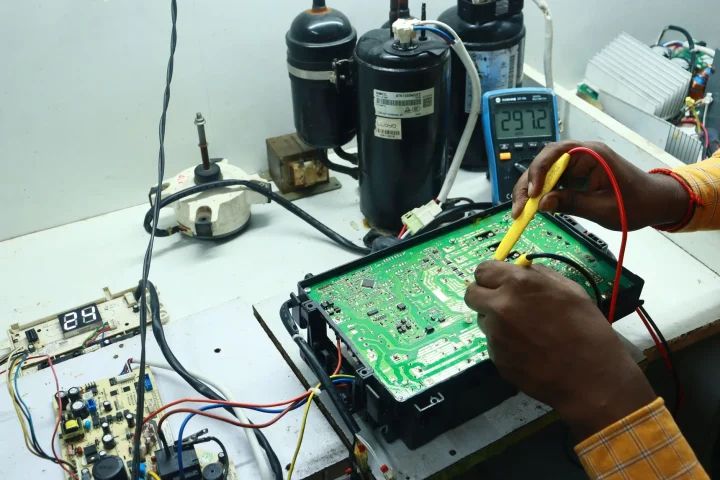
Once a season, set a multimeter to ohms and probe from each underwater fitting to your common bonding point. You want to read less than 1 ohm, ideally near zero. Anything higher means a loose or corroded connection that is leaving a fitting unprotected.