Finding a 12V Short Circuit on a Boat

You flip the switch for the cabin lights and nothing happens. Then you notice the little glass fuse in the panel has a black smear across it, and the spare you just installed blew the second you reset the breaker. That repeated pop is the signature of a short, and on a boat it is worth chasing down properly instead of just feeding it new fuses.
A short circuit means electricity found a path it was never meant to take, usually the positive wire touching bare metal, a ground wire, or another conductor. Current spikes, the wire heats up fast, and your overcurrent protection (the fuse or breaker) trips to stop a fire. Tracking a 12v short circuit boat owners run into is mostly patience, a cheap meter, and a method.
Short circuit versus overload: know what you are chasing
These two get confused constantly, and they need different fixes. A short is a direct fault, positive touching ground or negative, and it draws enormous current, hundreds of amps in the first instant. The fuse blows almost the moment you energize the circuit.
An overload is different. The circuit is wired correctly, but you asked it to carry more than it was rated for, like running a 20-amp windlass on a 15-amp circuit. It usually takes several seconds of heat before the fuse gives up.
If your fuse pops the split second you close the switch, and pops again on a fresh fuse, treat it as a short. If it runs fine for a minute then trips, look at load and wire size instead. Our How to Choose Marine Wire Gauge guide covers the sizing side of that story.

Tools and materials you actually need
You do not need a shop full of gear. A basic kit handles nearly every short on a small boat.
- A digital multimeter with a continuity beeper (a $25 model is fine).
- Assorted spare fuses, or better, a self-resetting circuit breaker to save money while testing.
- A wiring diagram for your boat, or the patience to sketch one.
- A headlamp, and a mirror or phone camera for peering behind panels.
- Marine-grade heat-shrink butt connectors for the repair (never household wire nuts).
Step by step: finding the fault
Work through these in order. Rushing to the middle is where people waste an afternoon.
- Kill the power. Turn off the battery switch or pull the negative terminal. You want the circuit dead before you start probing so you do not create a new short with your test leads.
- Isolate the bad circuit. Turn every switch off, then energize one circuit at a time. The one that pops the fuse is your target. Everything else can wait.
- Disconnect the load. Unplug the light, pump, or radio at the end of the run. If the fuse now holds, the fault is in the device, not the wiring. If it still pops with nothing connected, the wire itself is shorted.
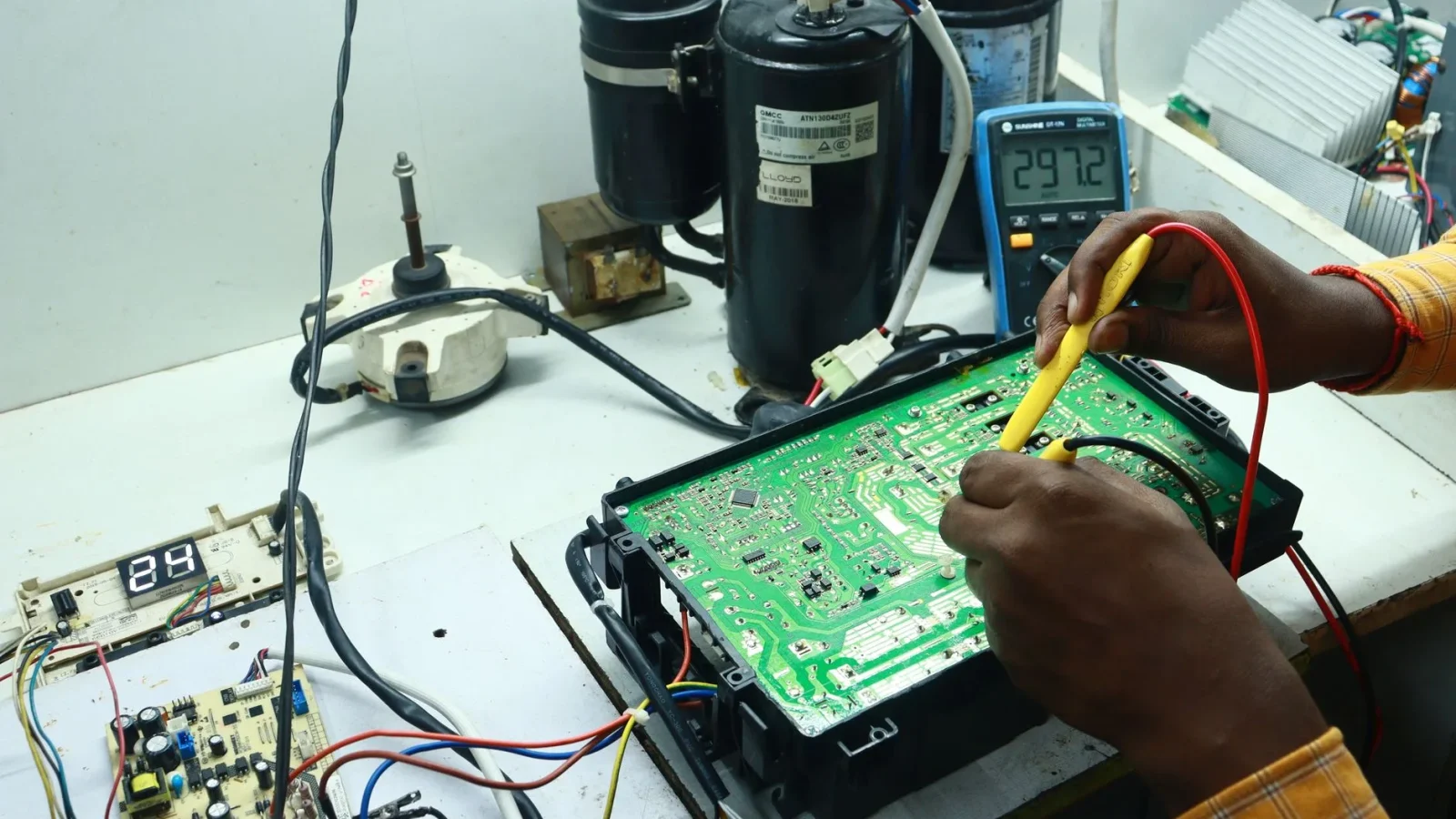
- Set your meter to continuity. With power off, touch one lead to the positive wire and one to a clean ground or the negative wire. A steady beep means positive and ground are touching somewhere. That is your short.
- Split the circuit in half. Find a midpoint connection, a junction or a butt splice, and separate it. Test each half for continuity to ground. The half that beeps holds the fault. Repeat, halving again, until you have a foot or two of suspect wire.
- Inspect the suspect run. Look for chafe where the wire crosses a bulkhead, a crushed spot under a floorboard, a green corroded crimp, or melted insulation. That is almost always where the copper is kissing metal.
This halving method is the same trick electricians use on house circuits. Instead of inspecting 40 feet of wire, you inspect 5. The 12V Boat Wiring Guide for Beginners shows how those runs are laid out so you know where the junctions hide.
A worked example from last spring
A 24-foot center console came in with a bilge pump circuit that blew its 15-amp fuse the instant the float switch closed. The owner had already fed it four fuses and one glowing-hot afternoon of frustration.
I killed the battery, pulled the pump wires off, and the fuse held. So the pump motor was suspect, but not certain. I set the meter to continuity, touched the pump’s positive and negative leads, and got a solid beep at near zero ohms. The motor windings had shorted internally, probably from years of sitting in salt water past its rating.
Total damage: a $22 pump and 30 minutes. Had the owner kept upsizing fuses to make the popping stop, that shorted motor could have cooked the 14-gauge wire back to the panel. Wire that overheats behind a bulkhead is exactly how bilge fires start.
Reading the clues before you tear into anything
The way a fuse fails tells you a lot. A fuse with the element snapped cleanly in the middle usually means a slow overload. A fuse with black soot smeared across the glass means a hard, fast short with real current behind it.
Location matters too. Shorts cluster in a handful of predictable spots on almost every boat.
| Common short location | Why it happens | How often I find it |
|---|---|---|
| Chafe at a bulkhead pass-through | Wire vibrates against a raw fiberglass or metal edge | Very common |
| Corroded crimp in the bilge | Salt water wicks in, copper turns green, insulation fails | Very common |
| Crushed wire under a deck plate | Someone stepped on or screwed through the run | Occasional |
| Failed appliance (pump, light) | Internal winding or element shorts to the case | Occasional |
| Pinched wire behind a panel | Trapped when the panel was last screwed shut | Occasional |
The American Boat and Yacht Council spells out how conductors should be supported and protected from chafe. Their standards are worth a look, and you can read the overview at the ABYC website. Boats wired to that standard short out far less often.
Fixing it right so it stays fixed
Once you find the wounded spot, cut out the damaged section rather than wrapping it in tape and hoping. Tape traps moisture and the corrosion just marches on.
Strip back to clean copper, join with a marine-grade adhesive-lined heat-shrink butt connector, and add a bit of loom or a rubber grommet wherever the wire passes an edge. If the run was undersized to begin with, this is your chance to fix that too. A wire that runs warm is a wire living on borrowed time, and Understanding Voltage Drop on Boats explains why the right gauge matters beyond just the short.
When to reach for the right protection instead
If you find yourself replacing the same fuse season after season, the circuit is telling you something. Sometimes the answer is a resettable breaker that lets you clear a nuisance trip without carrying a bag of glass fuses.
Sizing that protection correctly is its own skill, and the trade-offs between the two are laid out in Fuses vs Circuit Breakers on Boats. The rule that never changes: the fuse protects the wire, not the device. Match it to the smallest conductor in the run, and never go bigger to stop a symptom.
Chasing a short is not glamorous work, but it is deeply satisfying when that fuse finally holds and the pump kicks on like it should. Take it slow, keep the battery off while you test, and let the meter do the talking. For a broader picture of how your DC system fits together, the boating-safety resources at BoatUS are a solid next stop. Fix the copper, protect the run, and you can splash next weekend with one less thing waiting to ruin your day.
Frequently asked questions
How do I know if it is a short or just an overload?
A short trips the fuse the instant you close the switch, and it pops a fresh fuse just as fast. An overload usually runs for several seconds before the fuse gives up to heat. If it blows immediately with the load disconnected, treat it as a short in the wiring.
Can I test for a short with the battery still connected?
No. Do the continuity test with the battery switched off or the negative terminal removed. Probing a live circuit with your meter set to continuity can damage the meter, and bridging positive to ground with a probe can cause a flash and weld the tip.
Why does my fuse keep blowing even after I replace it?
A repeat blow means the fault is still there, not that the fuse was bad. Isolate the circuit, disconnect the load, and use continuity mode to find where positive touches ground. Never fix repeated blowing by installing a larger fuse, since that removes the protection for your wire.
Where are shorts most likely to hide on a boat?
Most shorts happen where a wire chafes against a bulkhead edge or where a crimp in the bilge corrodes from salt water. Crushed wires under deck plates and pinched wires behind panels are the next most common. A failed pump or light motor can also short internally.
What size fuse should I put back after fixing the short?
Match the fuse to the smallest wire in the run, not to the device. The fuse protects the conductor from overheating, so the wire gauge sets the rating. Check your boat diagram or a wire ampacity chart, and never upsize a fuse to stop nuisance tripping.