Boat Inverter and Charger Guide

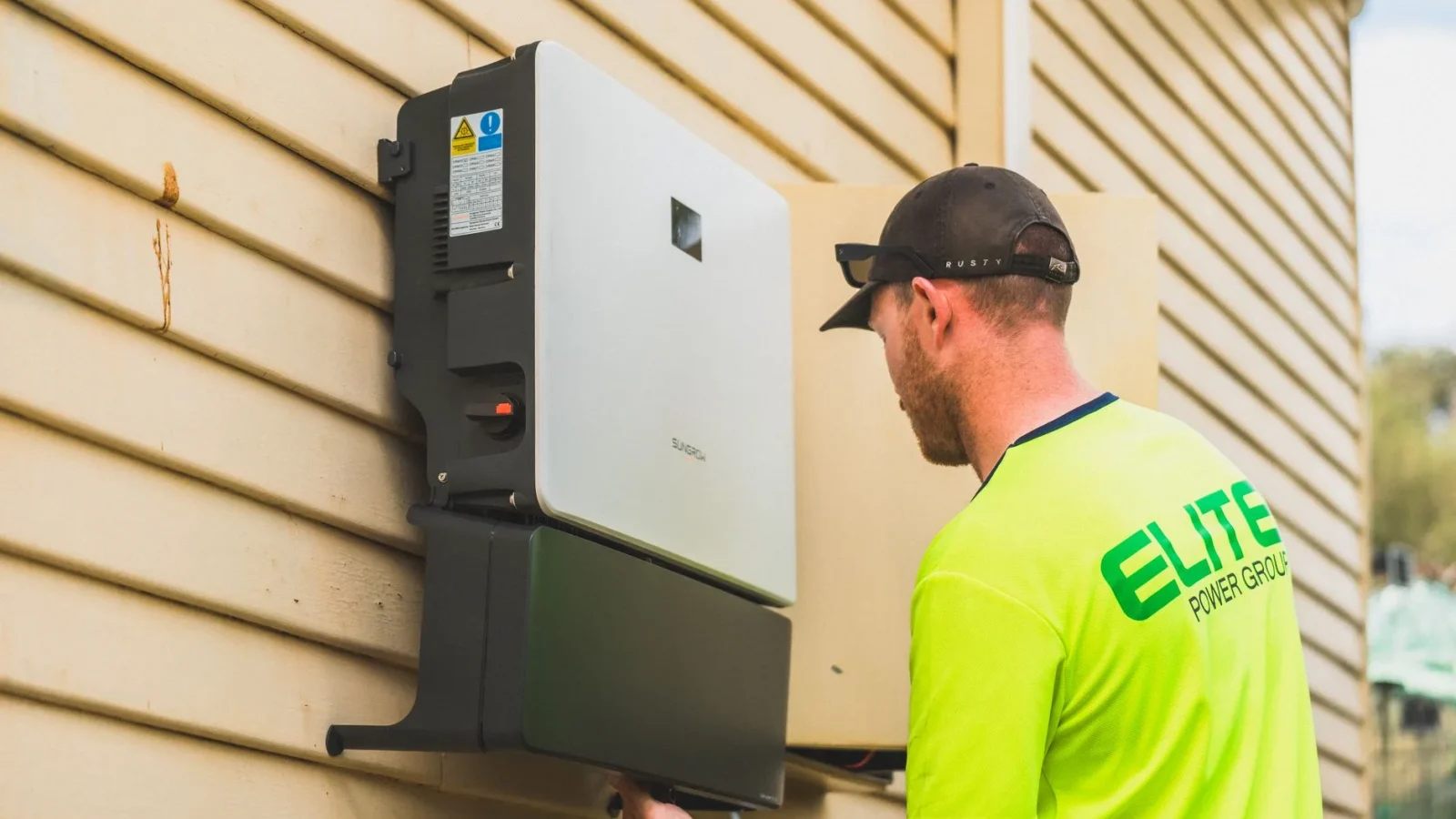
Stand on any dock on a Saturday morning and you will hear it: a genset chugging away just so somebody can run a coffee maker. That is the exact problem an inverter solves. You want to make toast or charge a laptop at anchor without firing up the engine, and you want the batteries to fill back up quietly when you plug in at the dock.
Those two jobs, making power and putting power back, are handled by a boat inverter and charger. This primer builds the whole picture from the ground up, defines the terms as they show up, and points you to the deeper guides for each decision you will actually have to make.
AC and DC, the two kinds of power on your boat
Every boat runs two electrical worlds side by side, and understanding the split makes everything else click into place. Your batteries store DC power (direct current), which flows in one steady direction at 12 volts on most boats.
The wall outlets in your house, and most of the appliances you own, run on AC power (alternating current), which reverses direction 60 times a second at 120 volts here in North America. A microwave, a hair dryer, a laptop brick: all of them expect AC.
Your boat cannot run those things straight off the batteries because the voltage and the type of current are both wrong. Something has to sit in the middle and translate. That translator, in one direction, is the inverter.
What an inverter actually does
An inverter takes 12V DC from your battery bank and steps it up into 120V AC that a normal appliance can use. Flip it on, and the outlet on your galley bulkhead comes alive without any shore cord plugged in.
The catch is that this costs a lot of current on the battery side. A 1,000-watt load at 120V AC pulls roughly 8 amps on the AC side, but close to 90 to 100 amps on the 12V DC side once you account for conversion losses. That is why inverters need fat cable and a healthy battery bank behind them.
A boat I rewired last spring had a 2,000-watt inverter wired with 6-gauge cable the previous owner had on hand. It browned out every time the coffee maker kicked on, because that cable simply could not carry the current. We swapped it for 2/0 cable over a 4-foot run and the problem vanished.
Pure sine versus modified sine
Inverters come in two flavors, and the difference matters more than the price tag suggests. The distinction is about the shape of the AC wave they produce.
A pure sine wave inverter makes power that looks like a smooth, rolling curve, essentially identical to what the utility company sends to your house. A modified sine wave inverter fakes it with a blocky, stepped waveform that is cheaper to build but harsher on sensitive gear.
Simple resistive loads like a kettle or an incandescent bulb do not care. But laptops, variable-speed tools, CPAP machines, and a lot of marine electronics can buzz, run hot, or refuse to work on modified sine. My rule at the dock is simple: if it has a microchip in it, buy pure sine. Our breakdown of pure sine vs modified sine inverters shows exactly which appliances misbehave and why.
Sizing the inverter to your real needs
Here is where people overspend or come up short. You do not pick an inverter by boat length or by adding up every wattage label in the galley. You size it to the largest single load you will run at one time, plus a little headroom.
Add up only the appliances you would realistically run together. A coffee maker and a phone charger, sure. A microwave, a hair dryer, and a space heater all at once, almost never. Match the inverter to that honest peak, and remember that some motors draw two to three times their rated wattage for a split second when they start.
| Inverter size | What it runs | Typical DC draw at full load |
|---|---|---|
| 300-600 W | Laptops, phone chargers, small TV, lights | 30-55 A |
| 1,000-1,500 W | Coffee maker, blender, small tools | 90-140 A |
| 2,000-3,000 W | Microwave, hair dryer, induction burner | 180-280 A |
Notice how fast the DC draw climbs. A 3,000-watt inverter can ask for nearly 280 amps, which demands a serious battery bank and cable to match. The full method, including how to audit each load and pick a size you will not regret, lives in our guide on how to size a marine inverter.
What a charger does, and why it is not automatic
The other half of the box is the charger, sometimes called a battery charger or converter. It takes AC power from the dock or a generator and turns it back into DC to refill your batteries. This is the reverse trip of what the inverter does.
A good marine charger is a multi-stage smart charger, meaning it changes its output as the battery fills. It pushes hard while the bank is low (bulk stage), eases off as it tops up (absorption), then holds a gentle maintenance voltage (float) so it never overcharges.
Cheap chargers skip these stages and just blast a fixed voltage, which slowly boils the electrolyte out of lead-acid batteries and shortens their life. Getting the charge profile right is the whole game, and our guide to shore power charging without cooking cells covers how to dial it in for your bank.
Matching the charger to your battery chemistry
This is the mistake I see most weekends: a brand-new lithium bank paired with an old charger set for flooded lead-acid. The two speak different languages, and the result is a bank that never fully charges or one that trips its protection and shuts off.
Each chemistry wants a specific charging voltage. Flooded, AGM, gel, and lithium all have different targets, and a proper charger lets you pick a profile or has separate models for each.
- Flooded lead-acid tolerates a wide range but needs a controlled absorption voltage to avoid gassing off water.
- AGM (absorbed glass mat) wants a slightly lower voltage than flooded and hates being overcharged.
- Lithium (LiFePO4) charges fast and flat, but needs a charger that respects its voltage limits and does not hold a float it does not want.
Set the wrong profile and you either starve the bank or overheat it. When you shop, buy a charger that clearly supports your chemistry, and confirm the settings against the battery maker’s spec sheet. The American Boat and Yacht Council publishes the wiring and safety standards most of this follows; the ABYC standards overview is worth a look before any AC install.
The alternator, the third charging source
Dock power is not your only way to refill batteries. While the engine runs, its alternator makes DC power, and on many boats that is the main charging source underway.
The trouble is that a standard alternator is tuned to top up a starting battery, not to bulk-charge a big house bank, and it can overheat if you ask it to. That is where a DC-DC charger earns its keep: it sits between the alternator and the house bank, regulates the charge, and protects both. If you are adding lithium or a large house bank, read our walkthrough on installing a DC-DC charger on a boat before you wire anything.
Inverter, charger, or one box that does both
You can buy an inverter and a charger as separate units, but most cruisers end up with a combined inverter/charger. One enclosure, one set of heavy DC cables, and a transfer switch that automatically feeds appliances from shore power when it is available and from the inverter when it is not.
The combined unit costs more upfront, roughly 500 to 2,500 dollars depending on size and quality, but it saves space, wiring, and a lot of head-scratching. For a small boat that only needs to charge phones and run a laptop, a standalone 600-watt inverter and a separate 20-amp charger might total under 300 dollars and do everything you need.
Size drives the decision. A weekender who occasionally makes coffee has different needs than a liveaboard running a microwave and a fridge off the bank. Slot this choice into the bigger picture with our marine electronics setup guide, which shows how the inverter, charger, batteries, and panel all connect.
Where to start this weekend
Do not buy hardware yet. Spend an afternoon listing the AC appliances you truly want at anchor, note the wattage on each label, and figure out which ones you would ever run at the same time. That single peak number sizes your inverter.
Then check what chemistry your batteries are and confirm your charger actually supports them. Get those two facts straight on paper, pick pure sine if anything you own has a microchip, and the install stops being a mystery. Sort the sizing, match the charger to the bank, and respect the cable gauge, and you will have quiet power at anchor and a bank that fills up right every time you plug in.
Frequently asked questions
Do I need a pure sine wave inverter or is modified sine fine?
Simple resistive loads like a kettle or an incandescent bulb run fine on either. But laptops, variable-speed tools, CPAP machines, and most marine electronics can buzz, run hot, or refuse to work on modified sine. If anything you plan to run has a microchip in it, buy pure sine.
How big an inverter do I need for my boat?
Size it to the largest single load you will run at one time, plus headroom, not the total wattage of everything you own. Add up only the appliances you would realistically run together, then check the DC draw against your battery bank. A 3,000 watt inverter can pull nearly 280 amps, so a big unit needs a serious bank and heavy cable.
What is the difference between an inverter and a charger?
An inverter turns 12V DC battery power into 120V AC so you can run household appliances at anchor. A charger does the reverse: it takes AC from the dock or a generator and turns it back into DC to refill your batteries. Many boats buy both in one box called an inverter/charger.
Will my charger work with lithium batteries?
Only if it supports the lithium profile. Flooded, AGM, gel, and lithium all want different charging voltages, and a charger set for lead-acid will either undercharge a lithium bank or trip its protection. Buy a charger that clearly lists your chemistry and confirm the settings against the battery maker's spec sheet.
Can the engine alternator charge my house bank instead of a charger?
It can while the engine runs, but a standard alternator is tuned for a starting battery and can overheat charging a big house bank. A DC-DC charger sits between the alternator and the house bank, regulates the charge, and protects both. It is the safe way to add a large or lithium house bank.