5 Inverter Installation Mistakes

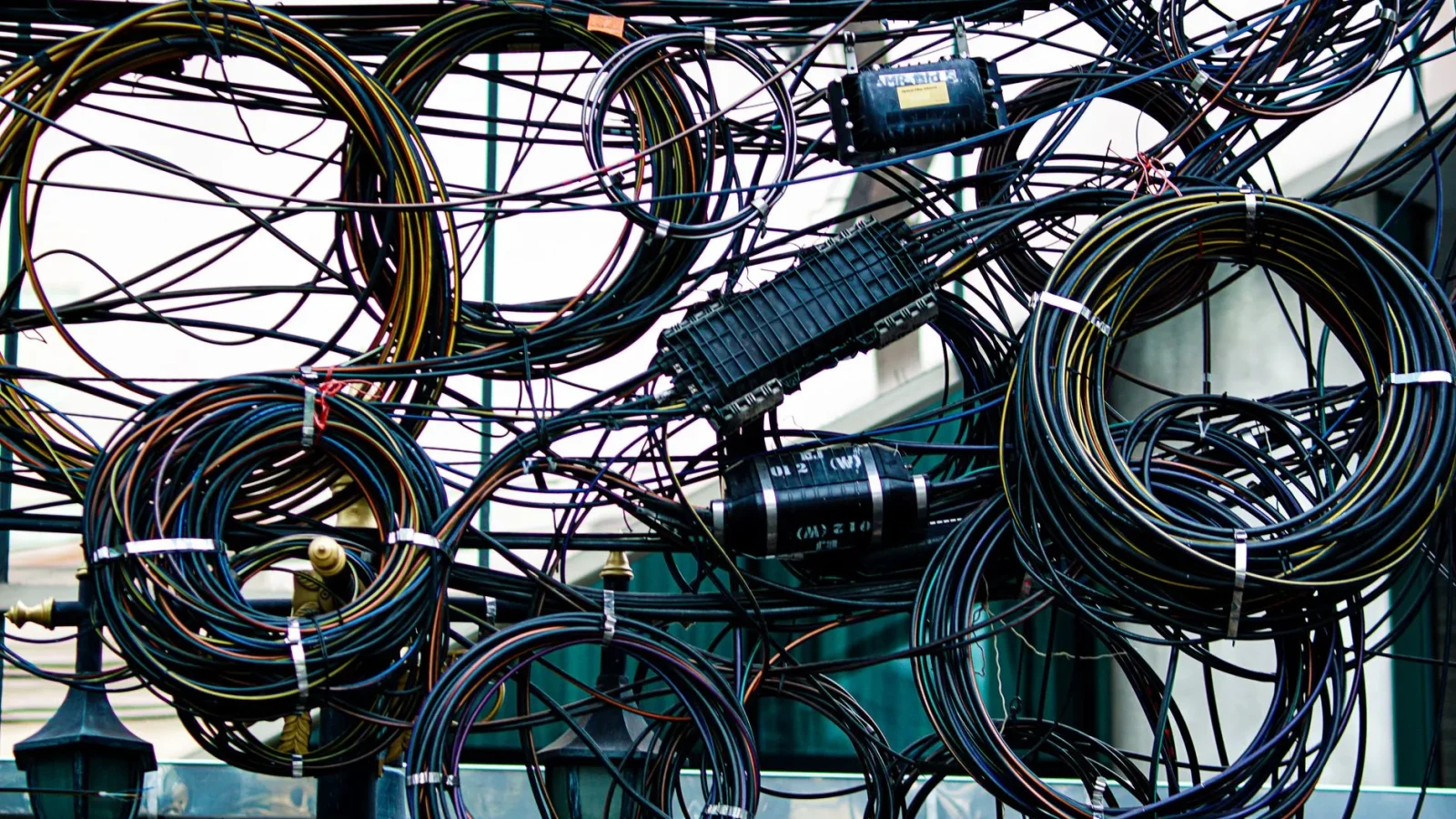
An inverter is the box that turns your battery’s 12V DC power into the 120V AC power that runs a coffee maker, a laptop charger, or a small microwave. On paper it looks like a two-wire job: red to positive, black to negative, done. On a boat, those two wires are exactly where most of the trouble starts.
I get called out to fix bad inverter jobs more often than almost anything else in the 12V world. The unit itself is usually fine. The install around it is what fails, and it fails in ways that range from annoying to genuinely dangerous.
Here are the five mistakes I see over and over, what actually goes wrong when you make them, and how to get each one right the first time.
Mistake 1: Cable that is way too small for the amps
This is the big one. A 2000-watt inverter running near capacity can pull more than 180 amps from a 12V battery. That is a staggering amount of current, more than most people ever picture flowing through a wire on their boat.
Folks reach for the wire they have in the locker, often 8-gauge or 6-gauge, because it looks thick enough. It is not. Undersized cable drops voltage, gets hot, and makes the inverter shut down or reset under load right when you need it.
A boat I rewired last spring had a nice 1500-watt inverter wired with 10-gauge cable on a 4-foot run. The owner could not figure out why his microwave tripped the unit every time. The cable was warm to the touch and eating roughly a volt before the current even reached the inverter.
The fix: size the cable to amps and length
Figure your worst-case DC amps first. A rough rule at 12V is watts divided by 10, so a 2000-watt inverter is around 200 amps of draw. Then size the cable for that current over the round-trip distance, keeping voltage drop under 3 percent.
For most inverters over 1000 watts on a short run, you are looking at 2/0 (often written “two-ought”) or 4/0 cable, not the skinny stuff. Use fine-stranded, tinned marine cable with proper crimped and heat-shrunk lugs. If you want the full method, the How to Size a Marine Inverter walkthrough covers both the inverter rating and the cable that feeds it.
| Inverter size | Approx. DC amps at 12V | Typical cable (runs under 5 ft) |
|---|---|---|
| 1000 W | ~100 A | 4-gauge to 2-gauge |
| 1500 W | ~150 A | 2-gauge to 1/0 |
| 2000 W | ~200 A | 1/0 to 2/0 |
| 3000 W | ~300 A | 4/0 |

Mistake 2: No fuse, or a fuse in the wrong place
The cable feeding your inverter can carry hundreds of amps. If it chafes through and shorts to the hull or a nearby metal bracket, an unfused cable turns into a red-hot heating element in seconds. That is how boats catch fire at the dock.
I still find inverters wired straight to the battery with no overcurrent protection at all. The owner assumed the inverter had a fuse inside. Internal fuses protect the inverter, not the cable, and the cable is the part that burns.
The fix: a properly rated fuse at the source
Put a Class T fuse or a marine-rated ANL fuse in the positive cable, right at the battery. For a 2000-watt inverter pulling around 200 amps, a 250-amp fuse is a common choice. Size it above your normal draw but at or below what the cable can safely carry.
Class T fuses are worth the extra ten or fifteen dollars because they have a high interrupt rating, meaning they can safely break a massive short-circuit current without arcing. A big lithium bank can dump thousands of amps into a dead short, and a cheap fuse can literally explode trying to stop it.
Mistake 3: Mounting it in a hot, sealed, or wet spot
Inverters run warm and breathe hard. They pull cooling air across an internal heat sink, and they need somewhere for that hot air to go. Cram one into a sealed lazarette or a tight electronics cubby and it will throttle back or shut down on thermal overload.
The other half of this mistake is water. Mounting an inverter low, over the bilge, or under a leaky deck fitting invites corrosion into a device carrying serious current. I have opened up units where the DC terminals were green and crusty inside two seasons.
The fix: dry, ventilated, and close to the battery
Pick a spot that is dry, has airflow, and sits as close to the battery bank as practical to keep the fat DC cable short. A short cable run saves money on copper and cuts voltage drop at the same time.
Keep it off the cabin sole and away from spray. If the only spot you have is marginal on airflow, add a small computer-style fan on a thermal switch to move air through the compartment. Planning your whole layout at once, using something like the Marine Electronics Setup Guide, saves you from wedging the inverter into whatever gap is left over.
Mistake 4: Wrong inverter type for the gear you run
Inverters come in two flavors. Modified sine wave is cheaper and puts out a blocky, stair-stepped approximation of AC power. Pure sine wave costs more and produces a smooth curve just like shore power or the grid at home.
People buy the cheap modified sine unit to save fifty bucks, then wonder why their new tools and electronics act strange. Modified sine can make induction motors run hot, buzz through audio gear, and upset the sensitive chargers in newer laptops and battery tools.
A charter skipper I know ran a CPAP machine off a modified sine inverter for a week and the unit’s motor whined all night. Swapping to pure sine fixed it instantly. Medical gear, variable-speed motors, and anything with a delicate power supply really want the clean waveform.
The fix: match the waveform to the load
If you only run simple resistive loads like an old-school toaster or incandescent lights, modified sine is fine and saves money. For anything with a motor, a microcontroller, or a medical function, buy pure sine and do not look back.
Honestly, prices on pure sine have dropped enough that I spec it by default on almost every job now. The Pure Sine vs Modified Sine Inverters comparison lays out exactly which appliances care and which do not.
Mistake 5: Oversizing the inverter and starving the battery
Bigger is not automatically better. A 3000-watt inverter bolted to a single Group 27 battery is a mismatch that will leave you dead in the water. The inverter can ask for 300 amps, but a small bank cannot deliver that without its voltage sagging through the floor.
The result is a low-voltage shutdown, a battery you have murdered in fifty deep cycles, or both. Weekend boaters do this constantly: they buy the biggest inverter on the shelf and hang it off a tired starting battery.
The fix: size the inverter and the bank together
Add up what you actually run at the same time. A laptop, a few lights, and a phone charger might total 300 watts, which a modest 600-watt inverter covers with headroom to spare. Buy for your real loads, not for the number that impresses your dock neighbors.
Then make sure the battery bank can feed it. As a rough guide, a lead-acid bank wants at least 100 amp-hours of capacity for every 1000 watts of continuous inverter draw, and lithium can push harder per amp-hour. If your bank is the weak link, a DC-DC charger install can keep it topped up from the alternator while you cruise. The Boat Inverter and Charger Guide ties the inverter, the bank, and the charging side together so nothing gets overwhelmed.
Getting the whole chain right
An inverter install is only as good as its weakest link, and the weak link is almost never the inverter itself. It is the cable that is too thin, the fuse that is missing, the corner that has no air, the waveform that fights your gear, or the battery that cannot keep up.
Fix those five things and a $200 inverter will run reliably for a decade. Skip them and a $1000 unit will frustrate you all season, or worse. For deeper background on wiring standards and fire safety around DC systems, BoatUS Expert Advice is a solid free resource.
Take an afternoon, size the parts honestly, and wire it like it matters. It does.
Frequently asked questions
What size cable do I need for a 2000-watt inverter?
A 2000-watt inverter at 12V can draw around 200 amps under load. On a run under 5 feet, that usually means 1/0 or 2/0 tinned marine cable to keep voltage drop under 3 percent. Longer runs need even fatter cable, so measure the round-trip distance before you buy.
Do I really need a fuse on my inverter?
Yes, always. The fuse protects the heavy positive cable, not the inverter, and an unfused cable that shorts out can start a fire in seconds. Fit a Class T or marine-rated ANL fuse within about 7 inches of the battery positive terminal, sized to the cable's capacity.
Is pure sine wave worth the extra money?
For most modern gear, yes. Pure sine runs motors, laptops, medical devices, and battery chargers cleanly, while modified sine can make them buzz, overheat, or misbehave. Prices have dropped enough that pure sine is the safe default unless you only run simple resistive loads like old-style toasters.
Can my inverter be too big for my battery?
It can. A large inverter can demand more current than a small bank can deliver, causing voltage sag, low-voltage shutdowns, and early battery death. As a rough guide, a lead-acid bank wants at least 100 amp-hours per 1000 watts of continuous inverter draw.
Where should I mount an inverter on a boat?
Choose a dry, ventilated spot as close to the battery bank as practical to keep the DC cable short. Keep it off the cabin sole and away from spray and bilge water, and leave a couple of inches of clearance around the vents so it can shed heat.