Running AC Tools From a Boat Inverter

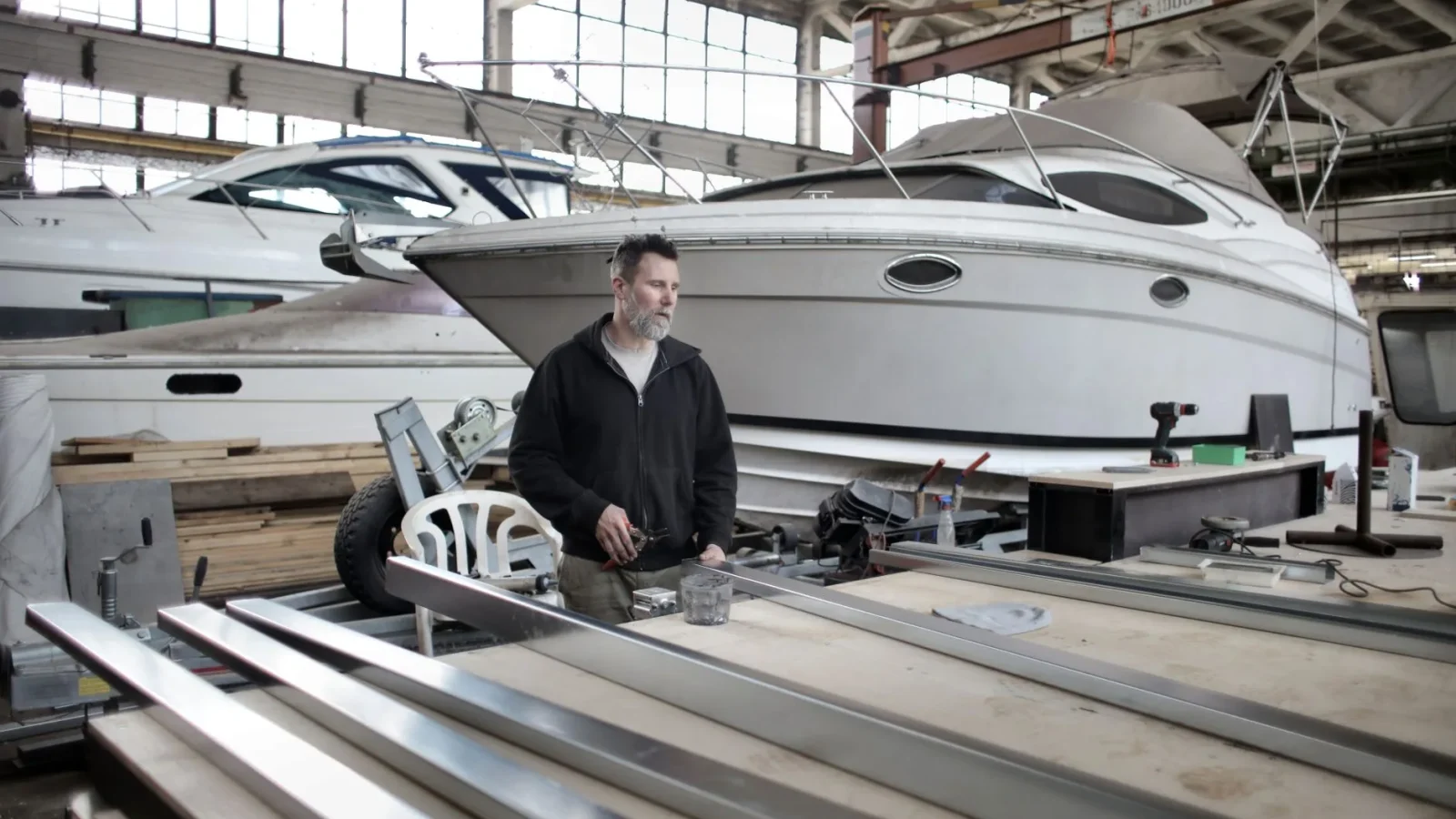
The angle grinder was the moment I knew our first attempt was undersized. We were rebuilding a swim platform on a 32-foot trawler last spring, cordless batteries dead, and the owner wanted to spin up a corded 4.5-inch grinder off the boat’s brand-new 1000-watt inverter. It ran for about eight seconds, then the inverter clicked into fault and shut down cold.
That project taught me more about running power tools off a boat than any spec sheet ever did. If you want to run ac tools from a boat inverter without cooking your wiring or nuisance-tripping every ten minutes, the math and the mistakes are worth walking through slowly.
The boat, the goal, and the wrong first guess
The trawler had a modest house bank: two 100-amp-hour AGM batteries wired for 200 amp-hours total at 12 volts. The owner had bought a 1000-watt modified sine inverter from a big-box auto store for about $90, figuring “1000 watts is a lot of power.”
On paper the grinder was rated at 700 watts. That felt like comfortable headroom.
The problem is that an induction or universal motor doesn’t sip its rated wattage the instant you pull the trigger. It surges. A 700-watt grinder can spike to 1400 or even 2000 watts for a fraction of a second as the motor overcomes inertia, and a cheap inverter sees that spike as a fault.
Watts, if the term is new to you, are just volts times amps, a measure of how much electrical work is being done at any moment. The inverter’s job is to convert your 12-volt DC battery power into 120-volt AC that a normal wall-plug tool understands.
Why startup surge is the whole game
Resistive loads like a heat gun or a work light draw a steady, predictable current. Motor tools do not.
The mistake I see most weekends is someone matching the inverter to the number stamped on the tool. That number is running watts. The one that actually matters is the surge, and manufacturers rarely print it plainly.
Here is the rough behavior I plan around for common corded tools:
| Tool | Running watts | Typical surge | Inverter I’d use |
|---|---|---|---|
| Corded drill | 500-700 W | 900-1000 W | 1000 W or larger |
| 4.5-inch angle grinder | 700-900 W | 1500-2000 W | 2000 W |
| 7.25-inch circular saw | 1200-1400 W | 2500-3500 W | 3000 W |
| Oscillating multi-tool | 200-350 W | 400-600 W | 600 W or larger |
| Shop vac | 800-1100 W | 1400-1800 W | 2000 W |
Notice the pattern. For anything with a spinning motor, I want an inverter rated at roughly double the tool’s running watts so the surge lands inside its continuous rating, not its momentary peak.
The cable was the real failure
We swapped in a 2000-watt pure sine inverter, and the grinder spun up fine. Then I looked at how the owner had wired it, and my stomach dropped.
He’d run the inverter off 8-gauge cable, the same size as a decent set of jumper leads, over about six feet from the battery. At full grinder load that inverter can pull 180 amps or more from the 12-volt side. Pushing 180 amps through 8-gauge wire is how you start a fire.
The DC side of an inverter is brutal on cable because low voltage means high current. A 2000-watt load at 120 volts AC is only about 17 amps on the AC side, but on the 12-volt DC side that same power is roughly 170 to 200 amps once you account for inverter losses.
For a short run of a few feet feeding a 2000-watt inverter, I want 4/0 cable (pronounced “four-aught,” a very heavy welding-grade wire) and a fuse in the 250-amp range close to the battery. The American Boat and Yacht Council publishes the DC cable and overcurrent standards that marine work is held to, and they are worth following even on a weekend project.
Modified sine versus pure sine, in practice
The owner’s original inverter was modified sine, which produces a blocky, stepped approximation of the smooth AC wave you get from shore power. Plain motor tools mostly tolerate it, though they can run a touch warmer or hum oddly.
Where modified sine bites you is anything with sensitive electronics: battery chargers for cordless tools, some LED work lights, and any tool with a digital display. I’ve seen cordless-tool chargers refuse to charge, or throw fault codes, on modified sine.
We went pure sine on the rebuild specifically because the owner also wanted to top up his cordless drill batteries from the same inverter. If you’re weighing the two, the tradeoffs are laid out in our guide to pure sine vs modified sine inverters, and for tools plus chargers I lean pure sine almost every time now.
The battery bank is the quiet bottleneck
Here’s the part people forget once the inverter finally stops faulting. The tool runs, everyone’s happy, and then the batteries are flat in twenty minutes.
A grinder pulling 800 running watts draws close to 70 amps from a 12-volt bank while it’s cutting. Run it hard for ten minutes and you’ve pulled somewhere around 12 to 15 amp-hours. On a 200-amp-hour bank you should only use about half before recharging, so you have maybe 6 to 8 short bursts before you’re into territory that shortens battery life.
AGM and flooded lead-acid batteries also sag under heavy load. As voltage drops toward 11 volts under a big surge, the inverter has to pull even more amps to make the same watts, which can trip its low-voltage cutoff mid-cut.
How I’d size and wire it from scratch
If a customer told me today they wanted to run occasional corded tools on a weekend project boat, here’s the build I’d sketch before touching a wrench.
- Inverter: 2000-watt pure sine for grinders, drills, and shop vacs. Step up to 3000 watts if a circular saw is on the list.
- Cable: 4/0 for a 2000-watt unit on a run under about five feet, kept as short as physically possible.
- Fuse: A Class-T or ANL fuse near 250 amps, mounted within 7 inches of the battery positive.
- Battery: A house bank of at least 200 amp-hours, ideally lithium if the budget allows, kept separate from the engine start battery.
- Charging: A way to put those amp-hours back, whether that’s shore power, solar, or an alternator feeding through a smart charger.
Getting the inverter rating right is worth a slow read on its own, and I walk through the full calculation in how to size a marine inverter. For keeping the bank topped up while the engine runs, a proper DC-DC charger install is the cleaner answer than tapping the alternator directly.
What went right, what I’d change
By the end of that swim-platform job, the 2000-watt pure sine inverter on 4/0 cable ran the grinder, a corded drill, and a shop vac without a single fault. Total upgrade cost over the original setup was roughly $350: about $220 for the inverter, $90 for cable and lugs, and $40 for the fuse and holder.
What I’d change is the battery plan. We were still running two AGM batteries, and on a long afternoon of cutting we drained them faster than the boat’s small charger could keep up. A single 100-amp-hour lithium battery would have held voltage better and given us more usable cycles.
If you’re planning a build like this, start with the whole-system view in our Boat Inverter and Charger Guide, then think about how it fits the rest of your marine electronics setup so the inverter isn’t fighting your chargers and instruments for the same tired batteries.
Before you pull the trigger the first time
Run a dry test at the dock, not offshore, with the batteries full and a fire extinguisher within reach. Watch the inverter’s display and listen for its fan spooling up as you load the tool.
If it faults on startup, your surge is too big for the inverter or your DC cable is too thin. If it runs but the batteries sag fast, your bank is the limit, not the inverter. Both are fixable, and both are a lot cheaper to learn about tied to a cleat than they are drifting with a dead house bank and a job half finished.
Frequently asked questions
What size inverter do I need to run power tools on a boat?
Size for the tool's startup surge, not its running watts. A grinder or drill can spike to 2 or 3 times its rated draw for a moment, so a 700-watt grinder wants a 2000-watt inverter. For a circular saw, plan on 3000 watts. Doubling the running watts is a safe rule of thumb for motor tools.
Can I run tools off a modified sine inverter?
Plain motor tools usually run on modified sine, though they may hum or run slightly warmer. The trouble comes with cordless-tool chargers, LED lights, and anything with a digital display, which can fault or refuse to work. If you also want to charge batteries from the same inverter, choose pure sine.
What gauge cable connects the battery to the inverter?
The DC side carries huge current because the voltage is low. A 2000-watt inverter can pull 170 to 200 amps from a 12-volt bank, so a short run needs roughly 4/0 cable. Always keep the cable as short as possible and add a fuse near the battery to protect it.
Do I really need a fuse between the battery and inverter?
Yes, and it is the most skipped step. The fuse protects the cable, not the inverter, and belongs within about 7 inches of the battery positive terminal. A 250-amp Class-T or ANL fuse suits a 2000-watt setup. Without it, a shorted cable can melt copper and start a fire.
How long can I run a grinder off a 200 amp-hour battery bank?
A grinder pulling 800 running watts draws close to 70 amps from a 12-volt bank while cutting. Ten minutes of hard grinding pulls roughly 12 to 15 amp-hours. On a 200 amp-hour bank you should only use about half before recharging, so expect 6 to 8 short bursts before battery life starts to suffer.