Lithium Drop-In vs Custom Cell Builds

Two boats came into the yard the same week last fall, both wanting lithium. One owner wanted a pair of sealed batteries he could bolt in on a Saturday and forget about. The other had a chartplotter, an inverter, a freezer, and a plan to run his whole cabin off the sun. Same chemistry, completely different jobs, and that split is exactly what the drop-in vs custom lithium decision comes down to.
A drop-in is a finished lithium battery in a lead-acid case, ready to bolt in. A custom build is bare cells you wire together yourself with a separate battery management system. Both can be excellent. Both can be a waste of money if you pick the wrong one for how you actually boat.
Let me lay them side by side the way I would for a customer standing in my shop, without the forum tribalism.
What each one actually is
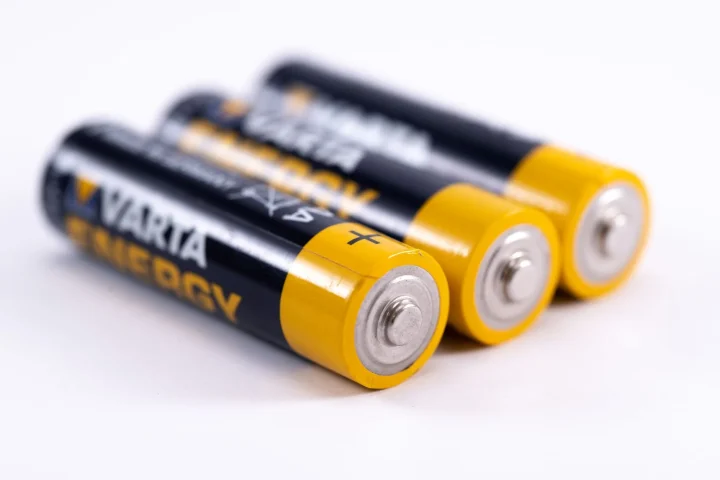
A drop-in (the industry sometimes calls it a “bolt-in”) is a complete battery. Open the plastic case and you’ll find four LiFePO4 cells, a battery management system board, and internal wiring, all sealed up in a box the size of a Group 24 or 31 lead-acid battery. LiFePO4 is lithium iron phosphate, the stable lithium chemistry used in boats and RVs because it doesn’t have the fire reputation of phone batteries.
You bolt it into the same tray your old battery sat in, connect the same two cables, and it works. The BMS (battery management system, the small computer that protects the cells) is already tuned by the manufacturer.
A custom build starts with bare cells. You buy four, eight, or sixteen large prismatic cells, bolt them together with busbars, add a separate BMS you choose and program yourself, and build the whole thing into a box you fabricate or buy. Nothing comes pre-configured. You are the manufacturer.

The head-to-head, side by side
Here’s how the two compare on the things that actually matter when you’re standing at the boat with a wrench and a budget. Figures are what I see on real projects, not brochure numbers.
| Factor | Drop-in LiFePO4 | Custom cell build |
|---|---|---|
| Cost per 100Ah | $400-$900 | $250-$450 in parts |
| Install time | 1-3 hours | 2-4 full days for a first build |
| Skill needed | Basic wiring | Wiring, torque specs, BMS programming |
| BMS | Built in, fixed | You choose it, you program it |
| Warranty | 5-10 years, one phone call | Cell warranty only, you own the assembly |
| Repairability | Sealed, replace whole unit | Swap one cell or the BMS yourself |
| Best bank size | Up to ~300Ah | 400Ah and up |
| Bluetooth / data | On some models | Full control if you want it |
Read the cost row carefully, because it’s the whole reason custom builds exist. Parts are cheaper per amp-hour, but only after you’ve spent days of your own labor and bought the tools. For a small bank, that math almost never favors the build.
Where the drop-in wins
Simplicity is the headline. You can go from old lead-acid to lithium in an afternoon with a socket set and a crimper. No cell balancing, no BMS menus, no fabrication.
Warranty is the quiet advantage that owners underrate until something fails. When a drop-in acts up, you call the company and they send a replacement. When a custom build fails, you’re the warranty department, tracing which of sixteen cells drifted or why the BMS latched off at 2 a.m.
A boat I rewired last spring is the perfect example. The owner, a retired schoolteacher with a 24-foot cuddy, wanted a fridge to stay cold on weekend anchorages. Two 100Ah drop-ins, a proper charger, and 2/0 gauge cable had him sorted in one Saturday. A custom build would have saved him maybe $300 and cost him a month of learning he didn’t want.
Where the custom build wins
Money, at scale. Once you’re building a 400Ah or larger bank, the per-cell savings finally outweigh the labor. On a 600Ah house bank, I’ve seen a careful builder save $1,200 to $2,000 versus buying six drop-ins.
Control is the other draw. You pick the BMS, so you get exactly the low-temperature cutoff, continuous current rating, and Bluetooth data you want. A serious cruiser who wants to see individual cell voltages on a phone gets that with a build, and rarely with a sealed unit.
Repairability matters on a long-term boat. If one cell in a custom bank weakens after eight years, you unbolt it and swap in a new one for the price of a single cell. A sealed drop-in with one bad cell is often a whole new battery.
The mistakes I see most
The most common one is a weekend day-boater talking themselves into a custom build to save money on a bank they’ll cycle forty times a year. The savings are real on paper and meaningless in practice. You’ll spend more on the tools and cells you buy twice than you’d ever save.
The opposite mistake is buying six drop-ins for a liveaboard 600Ah bank because it felt safer, then paying a huge premium for that comfort. At that size, the build is genuinely the better engineering choice if you have the skills.
And the mistake that scares me: people building custom banks without understanding what the BMS does or why low-temperature charge protection matters. If you’re going that route, read up first. A clear grounding in How a Marine Battery BMS Actually Works is not optional homework, it’s the difference between a safe bank and a bad night.
When each option wins, in plain terms
Pick a drop-in if you want lithium done fast, your bank is 300Ah or less, you value the warranty, and you’d rather spend your weekend on the water than programming a BMS. That’s most boaters, honestly. The trade-offs are covered well in Are Drop-In LiFePO4 Batteries Worth It? if you want the deep version.
Pick a custom build if your bank is 400Ah or larger, you’re comfortable with wiring and torque specs, you want full control and repairability, and the parts savings on a big bank actually move your budget. Liveaboards and serious long-range cruisers are the natural fit.
If you’re stepping up from AGM and still weighing chemistries at all, start one level up. The Lithium vs AGM for Boats: Which Wins? comparison answers whether lithium is even your move before you argue about how to build it.
My honest recommendation
For the vast majority of boats, buy the drop-in. The premium you pay over a home build is really a payment for a working BMS, a warranty, and a Saturday afternoon instead of a lost month. Spend the difference on good cable and a proper LiFePO4 charger and you’ll be happier.
Go custom only if you’re building big, you enjoy the work, and you’ve done your reading, including the full Lithium Boat Battery Upgrade Guide and a hard look at the fire-safety basics from a source like BoatUS. Done well, a custom bank is a beautiful, repairable, cost-effective thing. Done carelessly, it’s the most expensive lesson on the dock. Match the choice to your skills and your bank size, and either path gets you years of quiet, reliable power.
Frequently asked questions
Is a custom lithium build actually cheaper than drop-in batteries?
Only at larger bank sizes. Bare cells run about $250 to $450 per 100Ah in parts versus $400 to $900 for a drop-in, but the savings vanish under the cost of tools and days of your own labor. On a small bank the build rarely pays off, while a 600Ah build can save $1,200 to $2,000.
At what bank size does a custom build start to make sense?
Roughly 400Ah and up. Below about 300Ah, a drop-in almost always wins on total cost once you count tools, time, and warranty. Past 400 to 600Ah the per-cell savings finally outweigh the labor, so liveaboards and long-range cruisers are the natural fit for a build.
Do I need to program a BMS if I buy a drop-in battery?
No. A drop-in ships with the battery management system built in and tuned by the manufacturer, so you just bolt it in and wire it. A custom build is different: you pick the BMS and program its cutoffs, current limits, and low-temperature protection yourself.
Can I repair a drop-in battery if one cell fails?
Usually not. Drop-ins are sealed, so a single bad cell often means replacing the whole unit under warranty. A custom build lets you unbolt and swap one cell for the price of that cell alone, which is a real advantage on a long-term liveaboard bank.
Are custom lithium builds safe for a beginner?
They can be, but only with care. Under-torqued busbars build heat and can start a fire, and a poorly chosen BMS may fail to protect the cells in the cold. If torque specs and BMS programming make you nervous, that is a clear signal to buy a drop-in instead.