Reading Battery State of Charge by Voltage

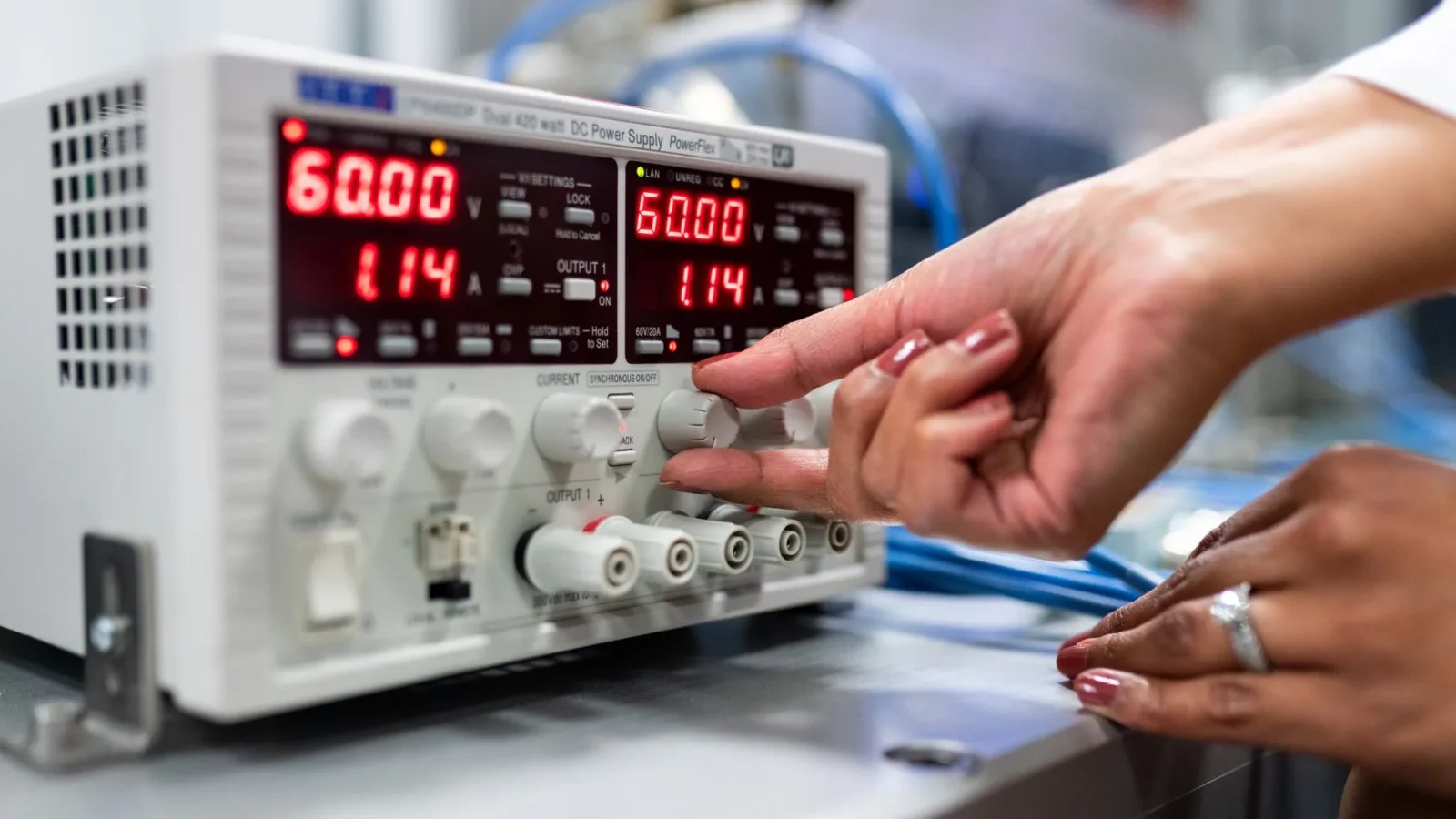
Pop the meter on a rested boat battery and it reads 12.6 volts. That single number, taken right, tells you the bank is basically full. Read it wrong, right after the engine shuts off or while the fridge is cycling, and the same battery might show 13.2 or 12.1, and you would be fooled either way.
Voltage is the cheapest fuel gauge you own. A $12 multimeter and a little patience will tell you how much is left in a 12V bank, without a fancy monitor. The catch is that a battery lies to you the moment you rush it.
Here is how to read it honestly, step by step, with a rested battery, a chart you can trust, and a worked example from a real weekend.
What state of charge by voltage really tells you
State of charge (SoC) is how full your battery is, written as a percent. Full is 100 percent, half-empty is 50 percent, and for lead-acid that 50 percent mark is the floor you should not push past on a regular basis.
The link between battery state of charge voltage and that percentage is real but fussy. A lead-acid battery at true rest sits at a predictable voltage for each fill level, which is why a meter works as a gauge at all.
The word doing all the heavy lifting there is rest. Voltage sags under load and floats high right after charging, and both effects hide the truth for a surprisingly long time.
Get the resting part right and voltage becomes a genuinely useful gauge. Skip it and you are reading noise.

Tools and materials you need
This is a cheap job. You almost certainly already own most of it.
- A digital multimeter that reads DC volts to two decimals ($12 to $40). The cheap ones are plenty accurate for this.
- Battery terminal access, or the posts on a battery switch that read the bank directly.
- A watch or phone timer, because resting the battery is the whole trick.
- Optional: a thermometer, since cold changes the numbers by a real margin.
If you would rather glance at a display than probe terminals, a shunt-based battery monitor (around $150 to $200) counts amps in and out and is more honest under load. Voltage is still the free method, and every boat owner should know it.
Step by step: reading state of charge by voltage
Work through these in order. The order matters more than the meter you use.
- Turn everything off. Kill the loads, the charger, the solar, and the engine. Anything pushing or pulling current corrupts the reading.
- Let the battery rest. Give it time to settle. A quick 20 minutes gets you close; a couple of hours or overnight is the gold standard. This is the step everyone skips and the one that ruins the reading.
- Set the meter to DC volts. On most meters that is the setting marked V with a straight line, not the wavy AC line. Pick the 20-volt range if yours is not auto-ranging.
- Touch red to positive, black to negative. Probe the actual battery posts if you can. Corroded or loose terminals drop voltage and lie to you.
- Read to two decimals. Write down 12.61, not “about 12 and a half.” The decimals are where the state of charge lives.
- Match it to the chart below for your battery chemistry, and correct for temperature if it is cold.
The lead-acid voltage chart
These figures are for a rested 12V lead-acid battery at roughly 77F (25C), which covers flooded, AGM, and gel. Individual brands wander by a few hundredths, but the shape holds on every bank I have tested.
| Resting voltage | State of charge | What it means aboard |
|---|---|---|
| 12.70 V or higher | 100% | Full, ready for the weekend |
| 12.50 V | ~80% | Healthy, plenty in reserve |
| 12.40 V | ~70% | Comfortable, keep going |
| 12.20 V | ~50% | The lead-acid floor, recharge soon |
| 12.00 V | ~25% | Too low, you are eating cycle life |
| 11.80 V or lower | ~0 to 10% | Nearly flat, damage territory |
Notice how tight that window is. The entire usable range for a lead-acid bank lives between about 12.7 and 12.2 volts, a swing of half a volt. That is why the decimals matter and why a rushed reading is worthless.
A bank that is wired unevenly ages unevenly, and one battery hits the floor before the others, so its resting voltage no longer represents the whole bank. Our guide on Wiring Batteries in Series and Parallel shows the layouts that keep every battery reading the same.
Lithium plays by different rules
Lithium iron phosphate (LiFePO4), the marine lithium in most drop-in batteries, has a flat voltage curve. That is great for your gear, which gets steady voltage almost to empty, but it makes voltage a poor fuel gauge.
A LiFePO4 bank might sit at 13.3 volts anywhere from 40 percent to 90 percent full. The numbers barely move across the middle, so guessing SoC from voltage on lithium is like reading a clock with only an hour hand.
| Resting voltage (LiFePO4) | Rough state of charge |
|---|---|
| 13.4 V or higher | ~100% |
| 13.3 V | ~70 to 90% |
| 13.2 V | ~30 to 60% |
| 13.0 V | ~20% |
| 12.8 V or lower | Nearly empty, dropping fast |
For lithium, a shunt monitor that counts amp-hours is the honest gauge, and voltage is only a sanity check. If you are weighing chemistries, our comparison of AGM vs Flooded vs Gel Batteries covers how each type behaves once it is installed.
A worked example from last season
A boat I helped last spring had a pair of group-31 AGMs, 200 amp-hours on paper. The owner swore the bank was dead by breakfast at anchor, but the batteries were only two years old.
We ran the test properly. He had been reading 12.9 volts the night before and calling it full, but that was surface charge straight off the alternator. Come morning, engine off overnight, the true rested reading was 12.18 volts.
Match that to the chart: right at the 50 percent floor. On a 200 amp-hour AGM bank, only about 100 amp-hours were ever usable, and he was landing on the floor every single night. The battery was fine. The habit and the reading method were the problem.
We fitted a monitor, added a small solar panel to refill during the day, and taught him the headlight-then-rest trick. His “dead” batteries are still going strong.
Correcting for temperature
Lead-acid voltage drops as the battery gets cold, so a chilly bank reads lower than its real state of charge. On a 40F morning, a battery that is genuinely at 12.5 volts of charge might show closer to 12.4.
The rough correction is small but real: figures on the chart assume about 77F. In cold weather, add roughly 0.01 volt for every 10 degrees below that before you match the chart. It is not much, but near the 50 percent line it can be the difference between “fine” and “recharge now.”
Lithium is fussier about cold in a different way, since you should not charge LiFePO4 below freezing. That is a charging concern, not a reading one, and the background on LiFePO4 chemistry explains why the cells behave the way they do.
Where voltage fits in your power system
Reading voltage is a habit, not a one-time trick. Check it the same way each week and you build a feel for what a full bank and a half bank look like on your boat, which no chart can teach as well as your own numbers.
The gauge is only as good as the bank behind it. If yours is undersized, you will hit the 50 percent floor no matter how carefully you read, so our walkthrough on How to Size a House Battery Bank is the natural companion to this one. And if you are still planning the layout, the Marine Battery Bank Setup Guide ties the whole system together, from wiring to monitoring.
For the installation and safety standards behind marine DC systems, the BoatUS expert advice library is a solid, plain-language reference worth bookmarking.
Learn to rest the battery, read to two decimals, and trust the chart, and you will always know where your bank stands. That knowledge, checked with a $12 meter over a morning coffee, is worth more than most of the gear on the boat.
Frequently asked questions
What voltage is a fully charged 12V marine battery?
A rested 12V lead-acid battery reads about 12.6 to 12.7 volts at full charge, measured after it has sat with no load or charger for a while. Straight off the alternator it may show 13.2 volts or more, but that is temporary surface charge. Let it rest before you trust the number.
How long should a battery rest before I read its voltage?
Give it at least 20 minutes with everything off for a rough reading, and a couple of hours or overnight for the most accurate result. A battery that just finished charging or discharging needs time for its voltage to settle. The overnight reading first thing in the morning is the cleanest one you will get.
What voltage means my lead-acid battery is at 50 percent?
A rested lead-acid battery at roughly 50 percent state of charge reads about 12.2 volts at 77F. That is the floor you should not push past regularly on flooded, AGM, or gel batteries. Below about 12.0 volts you are down near 25 percent and starting to shorten the battery's life.
Why does voltage not work well for reading lithium state of charge?
LiFePO4 batteries have a flat voltage curve, so they sit around 13.2 to 13.4 volts across most of their usable range. A reading of 13.3 volts could mean anywhere from 40 to 90 percent full. For lithium, a shunt-based monitor that counts amp-hours is the reliable gauge and voltage is only a rough check.
Does temperature change the voltage reading?
Yes. Lead-acid batteries read lower when they are cold, so a chilly bank looks emptier than it really is. Add roughly 0.01 volt for every 10 degrees below 77F before matching the chart. Near the 50 percent line this small correction can change your recharge decision.