Marine Solar Power Setup Guide

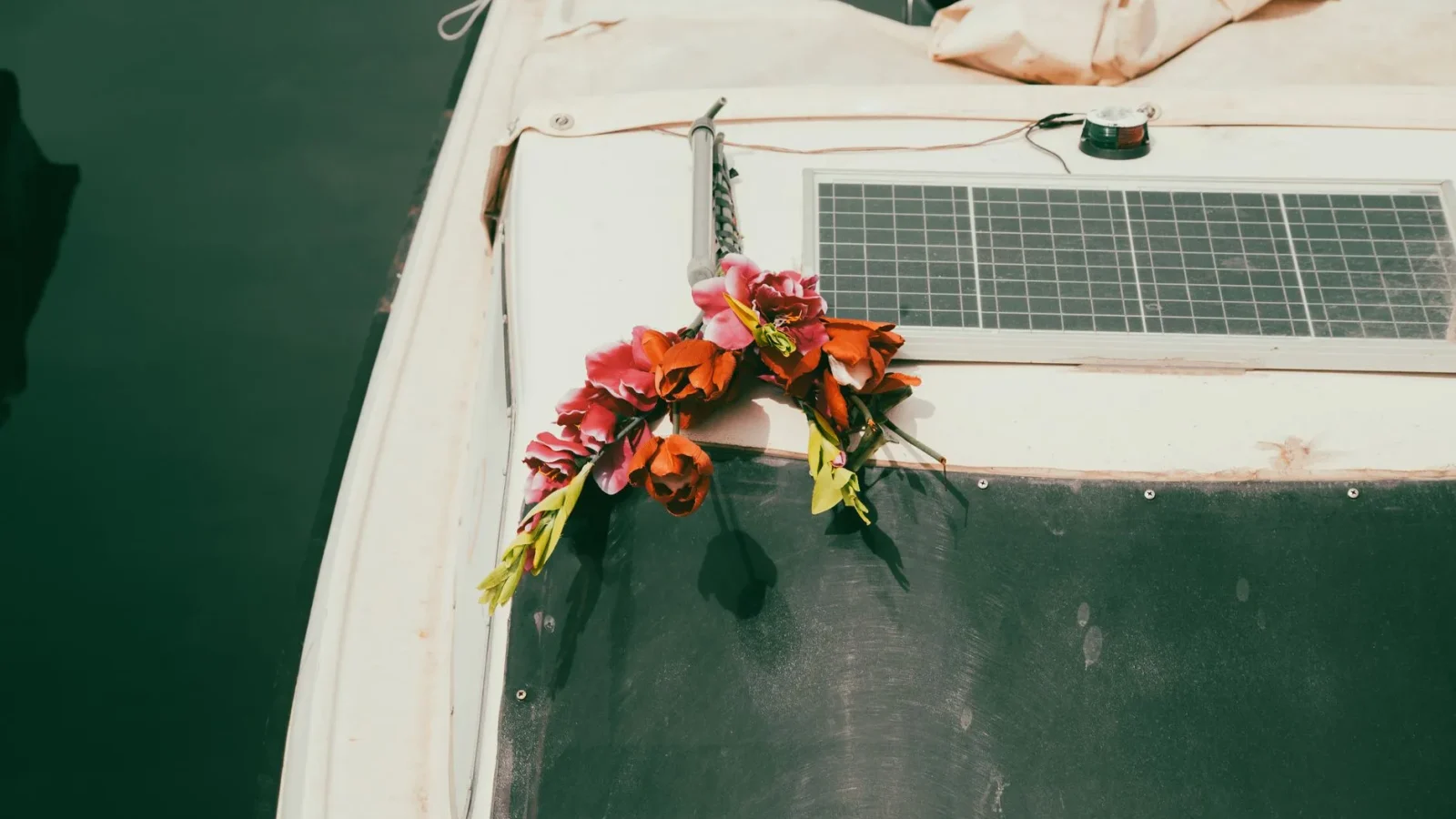
Picture a mooring field on a still August morning. Half the boats are running their engines at anchor just to keep the fridge cold and the anchor light burning, and the other half are quiet, soaking up sun through a couple of panels on the bimini. That second group figured out something the first group hasn’t: a modest solar array can carry most of a weekend’s electrical load without a single drop of diesel. Getting there is not complicated, but it does reward doing things in the right order.
This is the overview I wish someone had handed me before my first install. We’ll build a working mental picture of a marine solar power setup from the ground up, then point you toward the deeper guides for each decision along the way.
What a solar setup actually does on a boat
Solar’s job is simple: replace the amp-hours you drain from your battery bank each day so you don’t have to run the engine or plug into shore power. An amp-hour is exactly what it sounds like, one amp flowing for one hour, and it’s the unit that matters for battery planning.
A typical weekend cruiser burns somewhere between 40 and 100 amp-hours a day. That covers a 12V fridge, LED lights, phone charging, a bilge pump cycling now and then, and maybe some instruments. Your solar system exists to put those amp-hours back before sunset.
The honest goal for most boats is energy independence at anchor for a few days at a stretch. That’s very achievable. Living entirely off solar year-round is a bigger project, worth building up to rather than chasing on day one.

The four parts, and what each one does
Every install, cheap or fancy, comes down to the same chain of components. Understand these four and the wiring diagrams stop looking scary.
- Solar panels turn sunlight into DC electricity. Rated in watts, they’re the collector.
- Charge controller sits between the panels and battery, regulating voltage so you charge safely instead of cooking the bank.
- Battery bank stores the energy for when the sun’s down. This is your reservoir.
- Wiring, fuses, and connectors tie it together and keep a fault from starting a fire.
People obsess over the panels and ignore the last item. That’s backward. The mistake I see most weekends is a beautiful 300-watt panel feeding a controller through wire two sizes too thin, throwing away power as heat before it ever reaches the battery.
Panels: rigid or flexible
Rigid glass panels are cheaper per watt, last longer, and run cooler, but they need a frame or rail to mount. Flexible panels bend to fit a curved deck or bimini and weigh almost nothing, at the cost of shorter life and lower efficiency. If you’re weighing the two, our breakdown of flexible vs rigid marine solar panels lays out where each one earns its keep.
Charge controllers: the brain
There are two kinds, and the difference is real money. A PWM (pulse width modulation) controller is simple and cheap but drags panel voltage down to battery voltage, wasting the gap. An MPPT (maximum power point tracking) controller converts that extra voltage into usable current, typically harvesting 15 to 30 percent more.
On a 200-watt array that difference is roughly 40 to 60 watts of free power you’d otherwise lose. For anything above 100 watts I fit MPPT every time. The full comparison lives in our guide to MPPT vs PWM solar controllers.
Sizing the array to real usage
Here’s the step most people skip, and it’s the one that decides whether the whole thing works. Add up your daily amp-hours, then size panels to replace them with margin for cloudy days.
A rough rule on the water: in decent summer sun, each 100 watts of panel gives you around 30 amp-hours a day after real-world losses. So a boat burning 80 amp-hours daily wants roughly 300 watts to stay even, more if you anchor in the Pacific Northwest instead of the Bahamas.
| Boat and use | Daily draw | Suggested array | Rough cost |
|---|---|---|---|
| Weekender, no fridge | 20-40 Ah | 100 W | $150-350 |
| Cruiser with 12V fridge | 50-90 Ah | 200-300 W | $400-900 |
| Liveaboard, full comfort | 120-200 Ah | 500-800 W | $1,200-3,000 |
These are starting points, not gospel. To do it properly for your own boat, walk through our dedicated guide on how to size a boat solar array, which covers the load audit in detail.
Where you mount matters more than watts
A panel in full sun beats a bigger panel in partial shade, every time. Solar cells are wired in series inside a panel, so shading even one cell can choke output from the whole thing like a kink in a hose.
On a sailboat, the boom, mast, and rigging throw moving shadows all day. That’s why arch mounts over the stern and clean bimini installs win: they sit high and clear. If a bimini is your plan, see mounting solar panels on a bimini for the fabric-tension and framing details that keep panels flat and secure.
Because partial shade is unavoidable on most boats, it helps to understand how much it really costs you before you panic. Our piece on whether boat solar panels work in shade explains what to expect and how panel-level electronics soften the blow.
Wiring, fusing, and doing it to code
This is where a marine install differs from a shed roof. Salt, vibration, and moisture demand tinned copper wire, marine-grade connectors, and fuses sized to protect the wire, not the panel.
A short run from a 200-watt array usually wants 10-gauge tinned wire; longer runs or bigger arrays step up to 8-gauge to keep voltage drop under 3 percent. Every positive lead gets a fuse or breaker near the source. A boat I rewired last spring had a lovely panel setup ruined by a corroded automotive butt connector in the positive line, resistance so high the owner swore his controller had failed. It hadn’t. One bad crimp.
If any of this feels foreign, start with our 12V boat wiring guide for beginners before you cut a single wire. For the standards professionals build to, the American Boat and Yacht Council publishes the electrical guidelines most marine surveyors reference, and BoatUS has plain-language safety write-ups worth a read.
A sensible order to build it
Do these steps in sequence and you’ll avoid buying the wrong parts twice.
- Audit your daily amp-hour draw over a typical weekend.
- Confirm your battery bank is healthy and adequately sized first.
- Pick array wattage to cover that draw with 20 to 30 percent margin.
- Choose panel type based on your mounting surface.
- Match an MPPT controller rated above your array’s current.
- Wire with tinned marine cable, fuse every positive, and check voltage drop.
Notice batteries come before panels. Solar can’t fix a tired bank, and I’ve watched people spend $800 on panels to charge two dying batteries that couldn’t hold the energy anyway.
Getting your first quiet night at anchor
The first time you wake up at anchor, check the battery monitor, and see the bank already climbing at 7 a.m. with no engine noise, the appeal clicks. That’s the whole point: power that arrives silently while you sleep and top up while you swim.
Start modest, wire it properly, and grow the array as your needs do. A clean 200-watt setup that’s fused correctly will outlast and outperform a sloppy 500-watt one every season. Get the fundamentals right and the rest is just adding panels.
Frequently asked questions
How many solar panels do I need for my boat?
It depends on your daily amp-hour draw, not your boat size. A weekend cruiser with a 12V fridge typically burns 50 to 90 amp-hours a day and needs roughly 200 to 300 watts of panel. Audit your actual loads first, then add 20 to 30 percent margin for cloudy days.
Do I really need an MPPT controller, or is PWM fine?
For anything above 100 watts, MPPT is worth it. An MPPT controller harvests about 15 to 30 percent more energy from the same panels by converting excess voltage into usable current. On a 200-watt array that can mean 40 to 60 watts of free power a PWM unit would waste.
Will solar still charge my batteries in partial shade?
It will, but output drops sharply. Cells inside a panel are wired in series, so shading even one cell can choke the whole panel. That is why high, clear mounting on an arch or bimini matters more than raw wattage on most boats.
What wire gauge and fuses should a marine solar install use?
Use tinned copper marine cable. A short run from a 200-watt array usually wants 10-gauge wire, stepping up to 8-gauge for longer runs to keep voltage drop under 3 percent. Fuse every positive lead near its source, sized to protect the wire rather than the panel.
Should I upgrade my batteries or add solar first?
Sort the battery bank first. Solar cannot fix a tired or undersized bank, since the batteries store the energy the panels produce. Confirm the bank is healthy and correctly sized before spending money on an array.